Managing inventory is one of the most important responsibilities for any business that sells products. Whether you operate a retail store, an eCommerce business, a warehouse, or a manufacturing company, keeping the right amount of stock is essential for smooth operations.
However, inventory management is not always easy. Some businesses struggle with products going out of stock, while others end up storing more products than they actually need. Both situations can affect business performance, increase costs, and create problems for customers.
This is where Inventory Management Software becomes useful. It helps businesses track stock, manage products, monitor inventory levels, and make better purchasing decisions without depending entirely on manual records.
Let’s understand how the right inventory management system can help your business avoid stock shortages and overstocking.
What Is Inventory Management Software?
Inventory Management Software is a digital solution that helps businesses monitor, organize, and control their stock from one place.
Instead of maintaining product details in notebooks or multiple spreadsheets, businesses can use software to record stock purchases, sales, returns, and available quantities.
A good inventory management system provides better visibility into daily stock movements and helps business owners understand which products are selling quickly and which products are remaining unused.
Depending on the business requirements, the software can include features such as:
- Real-time inventory tracking
- Product and category management
- Stock-in and stock-out records
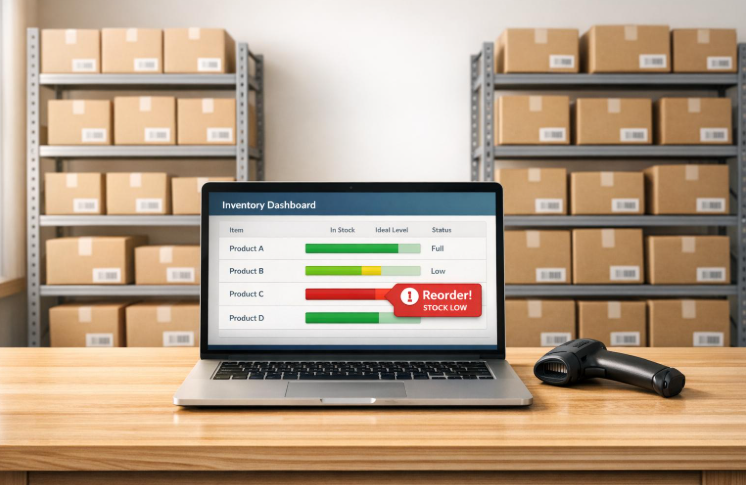
- Low-stock notifications
- Purchase and sales management
- Supplier information management
- Inventory reports and analytics
- Multi-warehouse stock management
These features make inventory operations easier, more organized, and more accurate.
Why Do Businesses Face Stock Shortages and Overstocking?
Before understanding the benefits of inventory software, it is important to know why these problems happen.
1. Poor Stock Tracking
When stock records are maintained manually, it becomes difficult to identify the exact quantity of products available. Small mistakes in data entry can create major differences between actual and recorded stock.
2. Unexpected Customer Demand
Some products sell faster than expected, especially during seasonal sales, festivals, and promotional campaigns. Without proper demand monitoring, businesses may run out of popular products.
3. Overstocking Due to Poor Planning
Ordering products without checking existing stock or previous sales can lead to unnecessary purchases. This increases storage costs and blocks working capital.
4. Lack of Real-Time Information
When sales, purchases, and warehouse records are not updated regularly, businesses may make decisions using outdated information.
An organized inventory management process helps reduce these problems.
How Inventory Management Software Helps Avoid Stock Shortages
Running out of popular products can result in missed sales and unhappy customers. Inventory management software helps businesses maintain better control over product availability.
1. Real-Time Stock Tracking
Businesses can monitor available stock as products are purchased, sold, or transferred. Updated stock information makes it easier to understand current inventory levels and plan future requirements.
2. Low-Stock Alerts
Low-stock notifications help business owners identify products that are running out. Instead of checking every product manually, they can focus on items that need attention and arrange new purchases on time.
3. Better Demand Planning
By reviewing previous sales and inventory reports, businesses can identify products with higher demand. This information helps them plan purchases according to customer requirements.
4. Faster Purchase Decisions
When stock information is available in one place, businesses can quickly identify which products need restocking. This reduces unnecessary delays in the purchasing process.
How It Helps Prevent Overstocking
Having more stock does not always mean having better business performance. Excess inventory can increase storage expenses, create wastage, and tie up money that could be used elsewhere.
Inventory management software helps prevent overstocking in several ways.
Monitor Available Stock: Check existing product quantities before placing new orders.
Analyze Sales History: Understand which products sell regularly and which products have low demand.
Improve Purchase Planning: Make purchasing decisions based on actual stock requirements instead of assumptions.
Identify Slow-Moving Products: Find products that remain in storage for a long time and take appropriate action.
Reduce Unnecessary Expenses: Avoid purchasing products that are already available in sufficient quantities.
By maintaining a balance between stock availability and customer demand, businesses can manage their resources more effectively.
Key Benefits of Using Inventory Management Software
Choosing the right stock management software can improve everyday business operations.
Here are some important benefits:
- Improved Accuracy: Reduces errors associated with manual stock records.
- Time Savings: Makes routine inventory activities faster and easier.
- Better Business Decisions: Provides useful information through inventory reports.
- Reduced Operational Costs: Helps control unnecessary purchases and storage expenses.
- Improved Customer Experience: Helps businesses maintain product availability.
- Better Organization: Keeps product, supplier, and stock information organized.
- Business Scalability: Supports growing inventory requirements as operations expand.
Who Needs Inventory Management Software?
Inventory management software is useful for businesses across different industries.
Some common examples include:
Retail Stores: Manage product quantities, daily sales, and restocking requirements.
eCommerce Businesses: Track online orders, available products, and stock across sales channels.
Manufacturing Companies: Monitor raw materials, finished products, and stock movements.
Wholesale Businesses: Manage large product quantities, suppliers, and warehouse inventory.
Distribution Companies: Track goods moving between warehouses and delivery locations.
Even small businesses can benefit from an inventory management system because organized stock records make daily operations easier.
How to Choose the Right Inventory Management System?
Not every business has the same inventory requirements. Before choosing software, consider your business size, product categories, daily transactions, and future plans.
Here are a few things to check:
- Easy to Use: The system should have a simple interface that employees can understand.
- Essential Features: Look for stock tracking, low-stock alerts, reports, and purchase management.
- Customization: Choose a solution that can support your business-specific processes.
- Data Security: Make sure business and inventory information is properly protected.
- Scalability: The software should support your business as it grows.
- Integration: Check whether it can work with your existing accounting, billing, or business management tools.
The right software should simplify your work rather than create additional complications.
Final Thoughts
Inventory management is not just about counting products. It is about knowing what you have, what you need, and when you need it.
With the help of Inventory Management Software, businesses can reduce stock-related problems, avoid unnecessary purchases, improve inventory visibility, and make more informed decisions.
Whether you run a small retail shop or manage a large warehouse, having an organized inventory system can make a significant difference in your daily operations.
At SSInformatics, we believe technology should solve real business problems. Our software development approach focuses on creating business solutions that match specific operational requirements and help organizations work more efficiently.
Looking to improve your business operations with the right software solution? Connect with SSInformatics and explore how custom software development can support your business goals.
Frequently Asked Questions (FAQs)
1. What is the main purpose of inventory management software?
The main purpose is to help businesses track, organize, and control their stock. It provides better visibility into available products, sales, purchases, and restocking requirements.
2. How does inventory management software prevent stock shortages?
It helps businesses monitor stock levels, identify products running low, and receive alerts when inventory needs restocking. This makes it easier to maintain product availability.
3. Can inventory management software help reduce business costs?
Yes. It helps reduce unnecessary purchases, control excess inventory, minimize manual errors, and improve storage planning.
4. Is inventory management software useful for small businesses?
Absolutely. Small businesses can use it to organize product records, monitor stock, manage purchases, and save time on routine inventory tasks.
5. What features should good inventory management software include?
Important features include real-time stock tracking, low-stock alerts, product management, purchase records, sales tracking, inventory reports, and supplier management.
6. What is the difference between inventory management and warehouse management?
Inventory management focuses on tracking and controlling stock quantities, while warehouse management focuses more on the storage, movement, picking, and handling of products within a warehouse.
7. Can inventory management software be customized?
Yes. Custom inventory software can be developed according to business requirements, including specific workflows, reporting needs, integrations, and multi-location inventory management.Cloud & IT Solutions: The Complete Guide to Accelerating Business Growth in 2026How Custom Software Development Helps Businesses Grow in 2026