
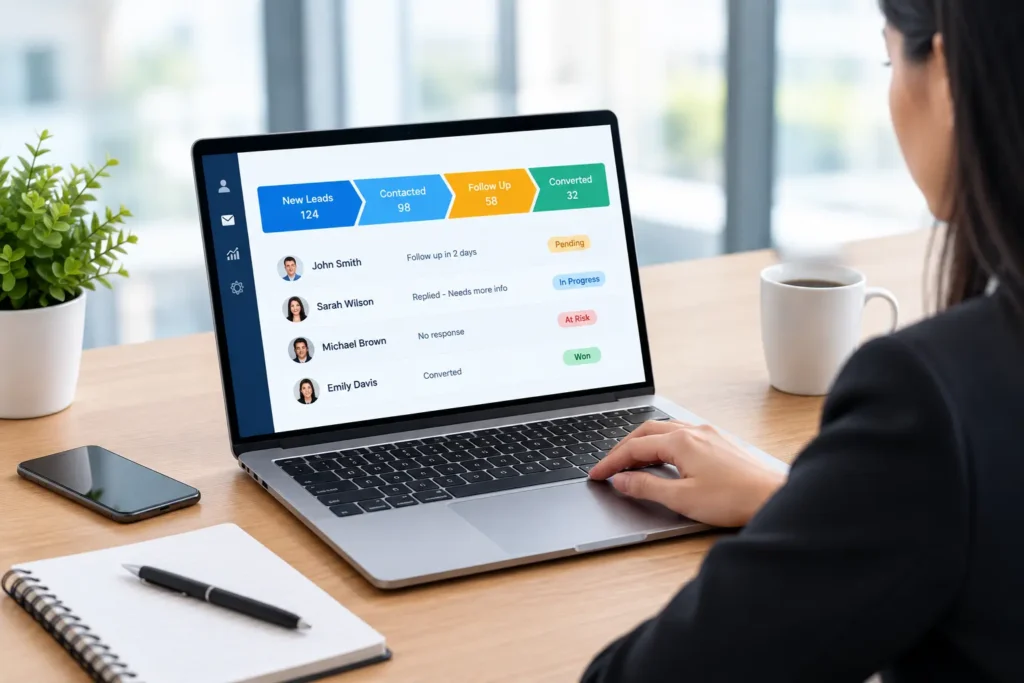
Generating leads is only the first step toward business growth. The real challenge is following up with potential customers at the right time, through the right channel, with the right message.
Many businesses lose valuable prospects not because they lack leads, but because their sales follow-up process is ineffective. Delayed responses, generic messages, and poor lead tracking can prevent interested prospects from becoming paying customers.
In this blog, we will explore seven common sales follow-up mistakes and how your business can avoid them to improve customer engagement and increase conversions.
1. Waiting Too Long to Follow Up
Timing plays an important role in sales. When a potential customer enquires about your product or service, they are often interested in learning more or comparing available options.
If your sales team takes too long to respond, the prospect may approach a competitor who provides quicker assistance.
How to avoid it:
- Respond to new enquiries as quickly as possible.
- Set reminders for pending follow-ups.
- Use automated notifications to prevent missed opportunities.
A timely response helps keep your business fresh in the customer’s mind.
2. Using the Wrong Communication Channel
Not every customer prefers the same communication method. Some prospects prefer email, while others respond more quickly to phone calls or WhatsApp messages.
Using only one channel may reduce engagement and make it harder to connect with potential customers.
How to avoid it:
- Ask prospects about their preferred communication method.
- Use email, phone calls, or messaging appropriately.
- Maintain a record of previous interactions.
A flexible communication strategy makes follow-ups more convenient for customers.
3. Sending Generic Follow-Up Messages
Sending the same message to every prospect can make your communication feel impersonal. Customers are more likely to engage when your message addresses their specific requirements.
For example, a customer enquiring about CRM software may want to understand automation, pricing, or integration options rather than receive a generic promotional message.
How to avoid it:
- Personalize messages using the customer’s name and requirements.
- Refer to previous conversations.
- Share relevant information that answers their questions.
Personalized communication builds trust and makes your follow-ups more meaningful.
4. Not Tracking Follow-Ups Properly
When sales teams depend on memory, spreadsheets, or scattered notes, important follow-ups can easily be missed. This creates confusion and makes it difficult to understand the current status of each lead.
How to avoid it:
- Maintain a centralized lead database.
- Record calls, emails, and customer responses.
- Set follow-up dates and reminders.
- Track leads through different sales pipeline stages.
A CRM system helps organize customer information and gives your team a clearer view of every opportunity.
5. Focusing Only on New Leads
New enquiries are important, but existing prospects also deserve attention. Some customers need additional information, internal approval, or more time before making a purchase decision.
Ignoring these prospects may result in losing potential sales that could have been recovered through appropriate follow-ups.
How to avoid it:
- Reconnect with prospects who have not responded.
- Share relevant updates and useful resources.
- Follow up according to the customer’s buying stage.
- Avoid excessive messaging that may feel intrusive.
Consistent, helpful communication can bring inactive leads back into the sales process.
6. Ignoring Customer Feedback
A customer’s response, even when it is negative, can provide valuable information. If prospects repeatedly mention pricing concerns, missing features, or unclear communication, your sales team should pay attention.
Ignoring this feedback can prevent your business from improving its sales approach.
How to avoid it:
- Record objections and frequently asked questions.
- Understand why prospects hesitate to purchase.
- Improve your product explanations and sales communication.
- Use feedback to refine your follow-up strategy.
Listening to potential customers helps your team address concerns more effectively.
7. Lacking a Clear Sales Follow-Up Process
Without a defined process, every sales representative may follow a different approach. Some leads may receive repeated messages, while others may never receive a second response.
An inconsistent process makes performance difficult to measure and sales opportunities harder to manage.
How to avoid it:
- Create a standard follow-up workflow.
- Define responsibilities for every sales team member.
- Establish clear lead statuses and follow-up schedules.
- Monitor response rates, conversions, and pending opportunities.
A structured sales process creates consistency and helps your business improve its results over time.
How CRM Software Can Help Your Business Stop Losing Leads
Customer Relationship Management (CRM) software helps businesses organize customer information, manage sales activities, and maintain consistent communication with prospects.
With the right CRM solution, your business can:
- Automate reminders: Schedule follow-ups and reduce missed opportunities.
- Centralize customer data: Keep contact details and interaction history in one place.
- Track the sales pipeline: Monitor leads from initial enquiry to conversion.
- Improve team collaboration: Give team members visibility into lead status and responsibilities.
- Measure sales performance: Review follow-up activity and conversion rates to identify areas for improvement.
Every business has different sales processes and requirements. Custom CRM development can help businesses build workflows, reports, and integrations that align with their specific needs.
Explore SSInformatics CRM Development Services to learn how tailored software solutions can support your sales and customer management processes.
Conclusion
Losing leads can be frustrating, especially when your business is investing time and money in marketing. However, many missed opportunities can be reduced by responding promptly, personalizing communication, tracking interactions, and following a consistent sales process.
Avoiding these seven common sales follow-up mistakes can help your business improve customer engagement, strengthen relationships, and increase conversion opportunities.
If your team struggles with scattered customer data or missed follow-ups, investing in an effective CRM solution may be the next step toward a more organized sales process.
Ready to improve your sales process? Connect with SSInformatics to explore CRM and custom software solutions designed around your business requirements.
Frequently Asked Questions (FAQs)
1. How soon should I follow up with a new lead?
Ideally, respond as soon as practical after receiving an enquiry. Prompt responses help maintain customer interest, while the appropriate follow-up timing depends on the customer’s needs and your industry.
2. What is the best way to follow up with potential customers?
The best approach is to personalize your communication, use the customer’s preferred channel, provide useful information, and follow up at appropriate intervals without being intrusive.
3. Can CRM software really help me get more sales?
CRM software can help improve lead organization, automate reminders, track customer interactions, and identify pending opportunities. These capabilities support better sales management, although actual results depend on your sales process and execution.
4. What features should I look for in a CRM system?
Look for contact management, lead tracking, sales pipeline management, follow-up reminders, reporting, automation, and integrations with the tools your business already uses.
5. How do I avoid losing leads in the sales process?
Respond promptly, maintain accurate customer records, personalize follow-ups, define a clear sales workflow, and regularly review inactive leads. A CRM system can help your team manage these activities consistently.Cloud & IT Solutions: The Complete Guide to Accelerating Business Growth in 2026How Custom Software Development Helps Businesses Grow in 2026

best blog